BlueSnarf++

BlueSnarf++ is an attack that is very similar to the famous BlueSnarf attack. The main difference is that BlueSnarf++ is an attack where the attacker has full read/write access to the device’s filesystem. The manufacturers of the devices that are known to be vulnerable have been informed about this issue.

Method

BlueSnarf++ gives the attacker full read/write access when connecting to the OBEX Push Profile. Instead of a less functional OBEX Push daemon, these devices run an OBEX FTP server that can be connected as the OBEX Push service without pairing. Here the attacker can see all files in the filesystem (ls command) and can also delete them (rm command). The filesystem includes eventual memory extensions like memory sticks or SD cards.

People Involved

For questions about the BlueSnarf++ attack, feel free to ask Adam Laurie, Marcel Holtmann or Martin Herfurt.
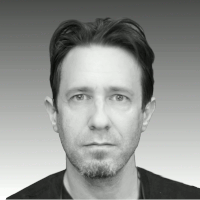


Adam Laurie is Chief Security Officer and a Director of The Bunker Secure Hosting Ltd. He started in the computer industry in the late Seventies, working as a computer programmer on PDP-8 and other mini computers, and then on various Unix, Dos and CP/M based micro computers as they emerged in the Eighties. He quickly became interested in the underlying network and data protocols, and moved his attention to those areas and away from programming, starting a data conversion company which rapidly grew to become Europe’s largest specialist in that field (A.L. downloading Services). During this period, he successfully disproved the industry lie that music CDs could not be read by computers, and, with help from his brother Ben, wrote the world’s first CD ripper, ‘CDGRAB’. At this point, he and Ben became interested in the newly emerging concept of ‘The Internet’, and were involved in various early open source projects, the most well known of which is probably their own—‘Apache-SSL’—which went on to become the de-facto standard secure web server. Since the late Nineties they have focused their attention on security, and have been the authors of various papers exposing flaws in Internet services and/or software, as well as pioneering the concept of re-using military data centres (housed in underground nuclear bunkers - http://www.thebunker.net) as secure hosting facilities. Adam has been a senior member of staff at DEFCON since 1997, and also acted as a member of staff during the early years of the Black Hat Briefings.


Sharing is caring!